How could we improve this service? Your feedback will help.

Media, production and broadcast

Careers in media, production and broadcast

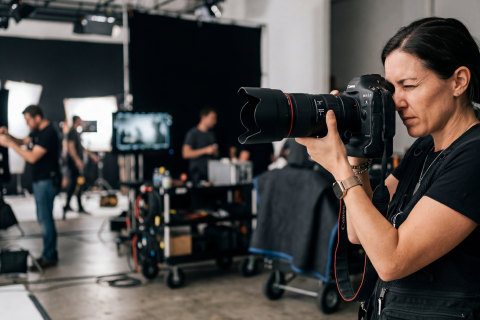
Working in media, production and broadcast offers lots of different roles.

You could:

  • work on television, radio, film, digital platforms or at live events
  • work behind the scenes, like as a runner
  • a technical role like lighting technician

There are roles at all levels with lots of routes in. You can find out about the different entry routes you can take on the job profiles.

Decorative.

Examples of careers in media, production and broadcast

Within this sub-sector, you'll find a range of career opportunities.

We've selected a few examples to show the variety of roles, levels and training times. Training time is the amount of time it takes to learn and gain the experience needed to do the job well.

Click on any of the job profiles to view information on entry routes, salary and progressions opportunities, plus much more.


Hear from people working in media, production and broadcast

Hear from individuals working in media, production and broadcast to find out about the jobs they do to see if a career in this sub-sector could be for you.

Meet actor Wilf

Actor Wilf first got the bug for acting in year 10 of secondary school.

1 minute 9 second watch

View transcript

Hi, my name is Wilf Scolding. I'm an actor.

I got the bug for acting in secondary school in year ten, so about 14, 15. Then didn't know the route that you could take into acting. And ended up being a chef for a couple of years. I managed to get into the 3-year course at Royal Welsh College of Music and Drama.

It's a sort of, it's a weird life. Sometimes you'll be really busy and sometimes you won't. So much rejection, I don't think, I can't think of any other profession where you deal with so much rejection on a, on a weekly basis. So you have to develop resilience and learn and to not take the rejections personally. It's just you weren't right for that part in that person's mind. That doesn't mean you're not a good actor and just build up the mental fortitude that you need to carry on.

Like when you get an audition through, there's nobody going to make you do the work. You have to do it yourself. And there's so many factors, outside factors, that will mean, that may mean that you don't get a part. But if you can say that your prep wasn't one of them, then at least you can go home happy.

Watch stuff and work out, work out what it is that you like, whether it's telling the story or you like that bit of acting, you believe that. And just keep that muscle because it is, it's just a muscle, keep that muscle fresh and, you know, your head in the game sort of thing.

Watch other videos

Hear from others working in media, broadcast and production to find out more about their role.

Meet stage manager Patricia

Patricia worked in lots of different roles in theatre, before working her way up to be the company stage manager.

2 minute 1 second watch

View transcript

My name is Patricia, or PD, and I am the company stage manager at Nottingham Playhouse.

So I started off as an actor. And I did a couple of stage plays. And I really loved that. I was, for a second half of a show, I didn't have anything to do but I had to be there for the curtain call.

So they set up some cans, or comms, headset, because I wondered what this person in the corner was doing. And I then later found out that it was the DSM, which is a deputy stage manager who calls the show. And so they set me up a set of comms, which I listened to. And there was like a, like all these doors kind of opened and just kind of went, oh my God, this is what I want to do.

A lot of people kind of think of theatre, they think of film, that it's acting and they don't think of all the, the other jobs that everybody does to make those things happen.

I’ve been very, very happy in the jobs that I've done and I've just worked my way up from being an assistant stage manager. I've been a scenic artist. I worked in a workshop as a carpenter. I've done some lighting design. I've done some sound, I’ve propped shows.

I've done everything you know, because I, I just wanted to work. And, and I thought for me, as a person growing, I thought it was just important for me to know what everybody else, every department did. And also when things didn't quite go according to plan in those departments of how you solve those problems.

Health and safety is very top of my list of, you know, because we might have quick changes. People running off to do those quick changes, and there's bits of set that's kind of have to come on as well. It's negotiating, navigating in the wings, what happens. And it's just looking after making sure everybody’s safe.

From, you know, the lighting designer out there to the flies, to the follow spots, to the, everybody. Everybody's important to the show. And so, you know, my job is to just to make sure everybody's jolly.

Meet broadcast engineer Cormac

Cormac is doing a broadcast engineering degree apprenticeship at the BBC.

1 minute 35 second watch

View transcript

Hi there, my name's Cormac and I am a broadcast engineering degree apprentice with the BBC, currently studying at Birmingham City University.

Our apprenticeship is based on block sort of learning. So we do 3 month blocks. One of them being at university, and then one at work, which is really really nice. Because you don't have to think about one when you're on the other.

We go from being in a classroom all the time here, to just out and about all the time when we're at work. So we're in offices all across the country. I'm always in Glasgow, London, Salford. Always darting around to do different experiences.

Lots of just this needs fixing, that needs fixing. here's a project that we want to deliver. Do you want to kind of take this and run with it?

My learning style is out in the field doing it and actually getting to experience it. There's so many skills you have to pick up over time, and some of them are really soft skills about communication, planning, organisation. And then there's the more kind of physical stuff with certain pieces of equipment or the way that we work within the broadcast industry.

I think if I had to pick a standout moment, it would be getting to do the election last year. That was fantastic. We were up in Glasgow for a week, and then all of us went off to our own locations. And we were actually, apart from the camera operator, the only engineer there.

We had to do everything from arranging access into the venue to working out where we were gonna be. Getting power, internet, everything. So that was really interesting because it just gave you a bit of a chance to kind of step out and go. I've done all of this in a team. I've done this with sort of other people looking after me. This is now my chance to show I can do it kind of on my own.


Example pay ranges in media, broadcast and production

Below are some examples of the pay you could earn from working in different jobs in this sub-sector.

If you’d like to see more salary information for more jobs in this sub-sector, you can view all careers in media, broadcast and production.

We estimate our salary ranges based on different sources. Find out more about the sources we use for salary information.

We'll put a salary as variable if reliable information is difficult to find. This might happen for jobs that are often freelance or have lots of self-employed workers.

Job role Starting pay Pay with experience
Actor Variable Variable
Advertising account planner £27,000 £55,000
Advertising art director £30,000 £60,000
Advertising copywriter £24,000 £45,000
Advertising media planner £24,000 £50,000
Animator Variable Variable
App developer £31,000 £65,000
Art editor £28,000 £54,000
Audio visual technician £22,000 £35,000
Broadcast engineer £27,000 £55,000
Broadcast journalist £27,000 £50,000
Carpenter £24,000 £40,000
Choreographer Variable Variable
Community arts worker £19,000 £29,000
Copy editor £24,000 £46,000
Costume designer £25,000 £45,000
Dance teacher Variable Variable
Dancer Variable Variable
Director of photography Variable Variable
DJ Variable Variable

Find out what type of career is right for you

If you're unsure about the type of careers that are right for you, you can take a skills assessment. There are no right or wrong answers when doing a skills assessment. It’s a way to understand yourself better and help you think about your next step.

Take a skills assessment

Explore all sectors

If you’re not sure that this is the right sub-sector for you, you can explore all sectors and discover what each sector has to offer.