How could we improve this service? Your feedback will help.

Sports and exercise

Careers in sport and exercise

Working in sport and exercise offers lots of different roles.

You could:

  • play a sport professionally
  • teach sports skills
  • support people to have a healthier lifestyle

There are roles at all levels with lots of routes in. You can find out about the different entry routes you can take on the job profiles.

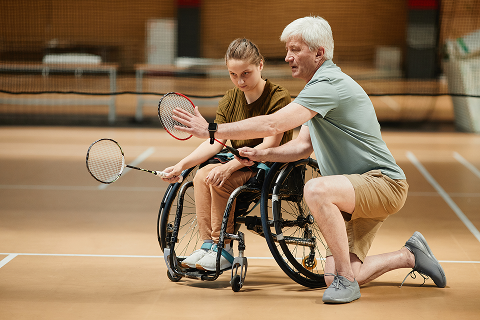
Decorative.

Examples of careers in sport and exercise

Within this sub-sector, you'll find a range of career opportunities from entry level, right up to senior management.

We've selected a few examples to show the variety of roles, levels and training times. Training time is the amount of time it takes to learn and gain the experience needed to do the job well.

Click on any of the job profiles to view information on entry routes, salary and progressions opportunities, plus much more.


Hear from people working in sport and exercise

Hear from individuals working in sport and exercise to find out about the jobs they do to see if a career in this sub-sector could be for you.

Meet swim teacher Evie

Evie is a casual swim teacher alongside studying at university.

1 minute 40 second watch

View transcript

My name is Evie. I'm a swim teacher, a lifeguard, receptionist, and I’m also walking netball trained at York Leisure Centre.

So I moved to uni in 2023, and I swim teached at home, and then my mum and dad were like, you need a job at uni. You need something. So I just looked online and this place were, they were advertising for a swim teacher. So that's how I started out.

I teach anywhere from 4 to 12. Before I joined here, I was level one swim teacher and level one swim coach because I used to coach at my old swimming club. And then when I, I did a year and I went through my level two swim teaching. And you sort of just develop that stroke knowledge. So I already had quite a bit from being a swimmer, but you just develop it even more. You learn the technical terms, you learn the actual, not how you’d teach it, it’s how everyone teaches it.

So there's a lot of technical terms that seven year olds don't understand, so you've got to make all these games and make it so that they understand what's going on. But yeah, it's, it's developing that stroke techniques the biggest part being a swim teacher.

Before I came I was first aid trained, but now I'm a lifeguard, I'm fully first aid trained, we’re defib trained, EpiPen trained, all of it. So that's, it’s sort of reassuring for me even when I'm swim teaching and I'm not actively lifeguarding, that if there's a first aid in my swim lessons, I can deal with it while I'm waiting for a lifeguard to come round.

I don't have a lot of contact hours at uni, thanks to my course. It's a lot of independent learning. So I’m only at uni two days a week. I can pick my shifts when they work for me. And there's always, like, overtime available. There's always, always something going. There's never a week where I'm not here.

Watch other videos

Hear from others working in sport and exercise to find out more about their role.

Meet lifeguard Isaac

As a lifeguard, Isaac is trained to spot problems before they happen to keep people safe.

1 minute 40 second watch

View transcript

Hi, my name is Isaac. I am a lifeguard or flexible worker here at GLL One NK.

Primarily, obviously I have to know all the first aid basics, and like how to save people if I need to in the water. Most of the time that doesn't happen because we're also trained to look and spot hazards and problems before they even occur to try and prevent them. So we spend most of our time sitting, watching the pool, trying to be as vigilant as we can to prevent people from getting hurt.

The times we’re off that we are like wandering around the centre, keeping it clean, keeping it tidy, helping out where we can. We get people asking for tips on swimming or just general fitness, those kind of things.

Like teamwork and like team building. It's like, it's very important here. You can't do everything on your own. If there's lots of people you need communication. We have radios for a reason. We learn, we learn to talk to each other and, like, trust each other.

To become a lifeguard, you have to have an NPLQ [National Pool Lifeguard Qualification], which is what you get from the Royal Lifesaving Society. To do that, you have to do a course, tends to be about 7 days long.

One thing that always makes me smile is you see people come in week after week and just slowly progress with their swimming. You see people literally not even wanting to touch the water, barely even dipping their foot in. And they go from that to a few months time swimming lengths like no one's business, they’re almost as good as I can. And it’s incredible to see really. It's just like, fitness is a big part of my life. And it's nice to see that other people are like, young and older, like trying to do it as well, you know, the best they can.

If someone is scared, they can almost look to me and know that I'm there when they need me, like, if they need me, that's it. I'm there. That's, yeah. There’s nothing to be worried about because we, well I say, we've got brilliant swim teachers as well and all this. But at the end of the day if anything goes wrong I'm, yeah I'm there like that.

Meet leisure centre manager Abby

Abby talks about the variety of tasks she does daily as a leisure centre manager.

1 minute 30 second watch

View transcript

My name is Abby. I'm a duty manager at Burnholme sports centre and Yearsley swimming pool.

So I started off at Yearsley 10 years ago as like a teaching assistant. Then became sort of a level 2 swim teacher so I took my own classes and then got my lifeguarding so was like casual lifeguarding as well. And I worked all the way through like university, and college and stuff, doing like lifeguarding and swim teaching with GLL. And then after Covid, I became full-time RA, so recreation assistant at Yearsley. And then sort of became senior rec assistant and then became casual duty manager and then duty manager full-time.

So if I'm on shift as a duty manager, like obviously opening and closing, depending on what shift I'm doing. All the checks, pool tests if I’m at the pool. Meter readings on the morning, then checking the inboxes, dealing with customers. Nothing's the same, there’s always something going on. And then I also like, do a lot of the organising and scanning and admin and all that sort of stuff as well.

Do a lot of, like, online training and like CPDs and all that sort of stuff. It was a level 3 duty manager apprenticeship. For me it was a big help because I could sort of reconsolidate all my learning that I did and like especially the financial side of, that wasn't my strongest. So to me, like learning about it as well through that really helped me.

Given me a lot more confidence about different skills and I can feel like I can deal with a lot more problems.


Example pay ranges in sport and exercise

Below are some examples of the pay you could earn from working in different jobs in this sub-sector.

If you’d like to see more salary information for more jobs in this sub-sector, you can view all careers in sport and exercise.

We estimate our salary ranges based on different sources. Find out more about the sources we use for salary information.

We'll put a salary as variable if reliable information is difficult to find. This might happen for jobs that are often freelance or have lots of self-employed workers.

Job role Starting pay Pay with experience
Athlete Variable Variable
Cycling coach £24,000 £32,000
Diver Variable Variable
Fitness instructor £21,000 £27,000
Football coach £19,000 £29,000
Football referee Variable Variable
Health trainer £24,000 £30,000
Jockey Variable Variable
Leisure centre assistant £19,000 £27,000
Leisure centre manager £24,000 £36,000
Lifeguard £19,000 £27,000
Outdoor activities instructor £23,000 £30,000
Performance sports scientist £25,000 £50,000
Personal trainer Variable Variable
Physiotherapist £32,000 £48,000
Physiotherapy assistant £25,000 £31,000
Pilates teacher Variable Variable
Sailing instructor Variable Variable
Sport and exercise psychologist £25,000 £50,000
Sports coach £19,000 £28,000

Find out what type of career is right for you

If you're unsure about the type of careers that are right for you, you can take a skills assessment. There are no right or wrong answers when doing a skills assessment. It’s a way to understand yourself better and help you think about your next step.

Take a skills assessment

Explore all sectors

If you’re not sure that this is the right sub-sector for you, you can explore all sectors and discover what each sector has to offer.