How could we improve this service? Your feedback will help.

Engineering, design and development

Careers in engineering, design and development

There are lots of different roles in engineering, design and development.

You could:

  • design, build or repair vehicles like boats or planes
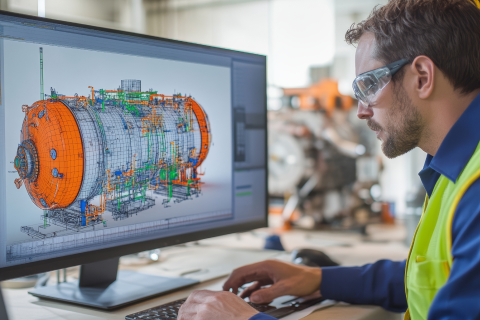
  • use software to design buildings, structures, vehicles, machinery and components
  • design and install manufacturing machinery and production lines

There are roles at all levels with lots of routes in. You can find out about the different entry routes you can take on the job profiles.

Decorative.

Examples of careers in engineering, design and development

Within this sub-sector, you'll find a range of career opportunities.

We've selected a few examples to show the variety of roles, levels and training times. Training time is the amount of time it takes to learn and gain the experience needed to do the job well.

Click on any of the job profiles to view information on entry routes, salary and progressions opportunities, plus much more.


Hear from people working in engineering, design and development

Hear from individuals working in engineering, design and development to find out about the jobs they do to see if a career in this sub-sector could be for you.

Meet civil engineer Voirrey

Voirrey is an assistant project manager for a civil engineering company.

1 minute 40 second watch

View transcript

My name is Voirrey Baker and I am a civil engineer. I currently work in the job role of assistant project manager for Amey here in Sheffield.

So currently in my day-to-day job, it's the planning and organisation of construction schemes. There's a fair bit of work that goes on behind the scenes before you can even, like, break ground on site. We need to get all the information from utility companies. You obviously get the design. You have to order the materials. You have to agree traffic management measures if you're working under closure or temporary traffic lights.

I manage the labour, come up with a programme and just make sure everything is prepared. And then once you're on site, sometimes you have to mark out what's going on where. There’ll be organisation of labour and subcontractors. And making sure everyone knows what they're doing at the right time. They've got everything they need. And kind of monitoring it as well, going off and checking sites, seeing how they're doing, if there's any issues.

I think problem solving is one of the things that interested me most about this, this role. The fact that you have to react, and it isn't going to be the same every day. How do you deal with, with issues when they arise?

Teamwork is a really big thing. Because there might be one of you. If it's just you, you can't build a lot. You've got to work with other people. And in that, you also want good communication.

The kind of satisfaction in, you know, when you see the work that you've worked on. I'll drive around town and go, oh, that was my scheme. I think that's pretty good.

Watch other videos

Hear from others working in engineering, design and development to find out more about their role.

Meet structural engineer Niklas

Find out what Niklas does each day as a wind turbine structural engineer.

3 minute 15 second watch

View transcript

As an engineer, you have the opportunity to really contribute to society by developing a certain field of technology and it's often not considered in that way by the society how big the impact is that engineers have on their life.

My name is Niklas Meyn, I'm a structural engineer at ACT Blade and we're designing wind turbine blades. So this starts with making usually a model for what we are planning to design or build. And then we are finding strategies how to analyse if that structure that we're planning to do is going to survive the loads that we see on an actual wind turbine site. And then based on that we can optimise the structure that we're building.

Once we're happy with a design, we would be running it through a simulation programme, which allows us to predict how the blade behaves on a turbine on an actual wind site. And we would go through a couple of these cycles until we are satisfied with the results and to the point where we have an optimised wind turbine blade.

We can't continue with the energy production how it is done today. We see the impact that climate change has already. Wind turbine blades are just a huge opportunity for the society that can offer a massive supply of energy, which is completely sustainable.

The wind turbine behind us, for example, is greater than 7 megawatts with a diameter of 170 meters. And at the moment, the industry is trialing the first double-digit wind turbines meaning they produce 10 megawatts or more. And they usually have a diameter of 200 metre, 210, 220 metres. Thus operating a 10 megawatt wind turbine for an hour provides electricity for 5 households for a year. And this is in just one hour of operation of the wind turbine.

At ACT Blade, we've chosen a completely different approach to designing wind turbine blades. It's completely different from what the industry does at the moment. The background of our company is the sailing industry. So we have been supplying sail makers and ship designers with a toolbox that allowed them to design sails and optimise them for a certain type of ship.

So we want to carry this technology forward onto wind turbine blades to make them more lightweight than what they are at the moment. And it's a major contributor to the cost is how stiff you have to design the blade. So the textiles that we are using and also the ones that are used in the sailing industry are very, very flexible. That helps us to keep the cost down.

If you want to improve from the current status quo, and this is what we all thrive to do. You need to do research to do that. It is worth doing all of the research, although a lot of it fails just for the few cases where it is successful, and where you as a society you find a new way forward,

It's exciting just to be part of the industry that tries to make energy production and living on Earth more sustainable in the future.


Example pay ranges in engineering, design and development

Below are some examples of the pay you could earn from working in different jobs in this sub-sector.

If you’d like to see more salary information for more jobs in this sub-sector, you can view all careers in engineering, design and development.

We estimate our salary ranges based on different sources. Find out more about the sources we use for salary information.

We'll put a salary as variable if reliable information is difficult to find. This might happen for jobs that are often freelance or have lots of self-employed workers.

Job role Starting pay Pay with experience
3D printing technician £27,000 £45,000
Acoustics consultant £28,000 £55,000
Aerospace engineer £30,000 £70,000
Aerospace engineering technician £27,000 £50,000
Agricultural engineer £28,000 £50,000
Air accident investigator £75,000 £100,000
Automotive engineer £26,000 £48,000
Boat builder £24,000 £42,000
Building services engineer £28,000 £51,000
CAD technician £24,000 £42,000
Chemical engineer £34,000 £65,000
Chemical engineering technician £25,000 £42,000
Civil engineer £29,000 £63,000
Civil engineering technician £26,000 £42,000
Clinical engineer £26,000 £75,000
Design and development engineer £25,000 £55,000
Electrical engineer £27,000 £58,000
Electrical engineering technician £24,000 £48,000
Electronics engineer £28,000 £60,000
Electronics engineering technician £26,000 £42,000

Find out what type of career is right for you

If you're unsure about the type of careers that are right for you, you can take a skills assessment. There are no right or wrong answers when doing a skills assessment. It’s a way to understand yourself better and help you think about your next step.

Take a skills assessment

Explore all sectors

If you’re not sure that this is the right sub-sector for you, you can explore all sectors and discover what each sector has to offer.